
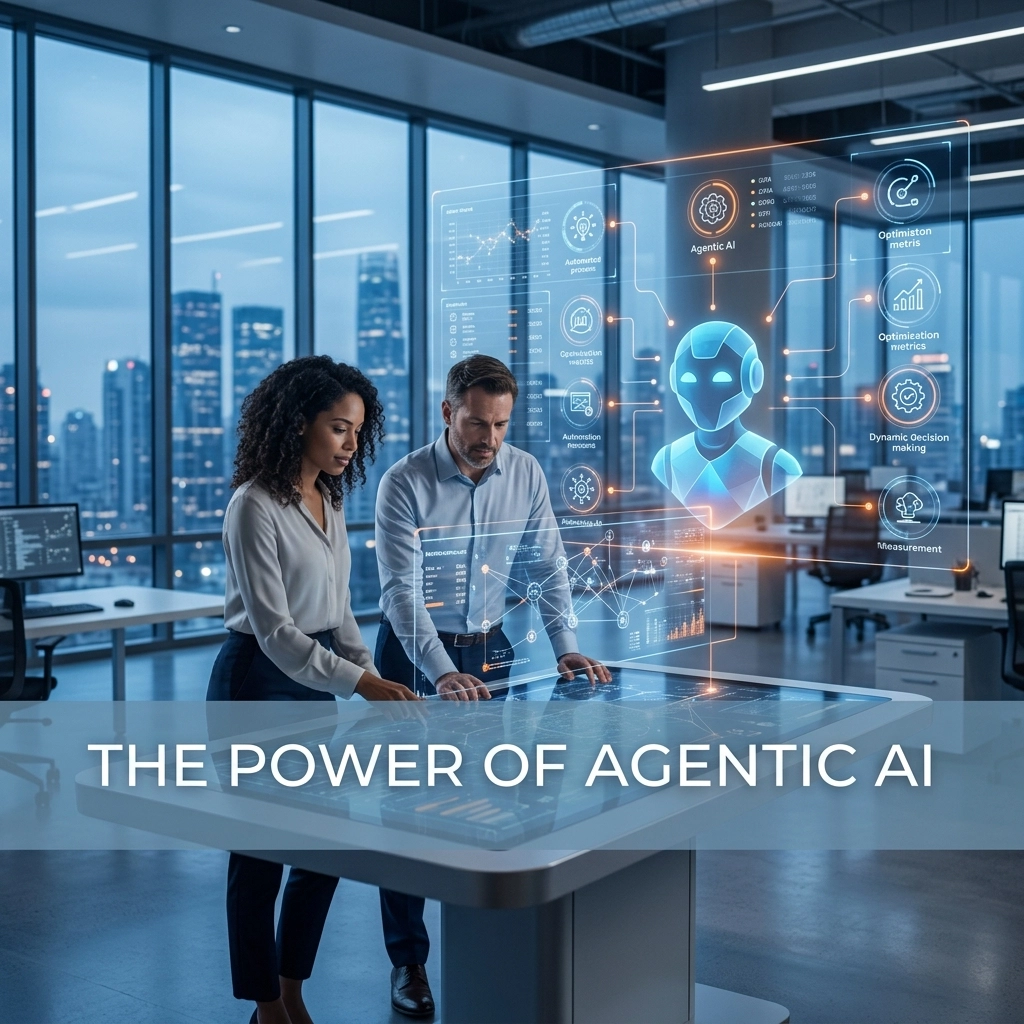
As the digital landscape continues to evolve at a breathtaking pace, the transition from passive tools to proactive systems is becoming the most significant shift in business history. In today's fast-paced corporate world, traditional automation, once the gold standard for efficiency, is proving insufficient for the complexities of modern workflows. We are witnessing the emergence of Agentic AI, a profound advancement that is fundamentally transforming how organizations approach operational excellence.
At ALINEDS, we recognize that staying ahead requires more than just adopting new technology; it necessitates a comprehensive understanding of how these tools reshape the very fabric of business logic. In this blog, we will explore the core differences between traditional automation and Agentic AI, the measurable benefits for business operations, and how your organization can prepare for this essential paradigm shift.
The Paradigm Shift: From Linear Tasks to Goal-Oriented Agency
In recent years, Robotic Process Automation (RPA) and basic machine learning models have been the primary drivers of digital transformation. However, these systems are inherently linear and brittle. They function based on predefined rules, if "X" happens, then do "Y." While this is effective for repetitive, predictable tasks, it falters the moment a process encounters an unexpected variable or a change in data structure.
Agentic AI represents a departure from this restrictive model. Unlike its predecessors, Agentic AI is designed to be goal-oriented. Rather than just following a set of instructions, these agents are capable of reasoning, planning, and executing sequences of actions to achieve a specific outcome. This capability is deeply rooted in artificial intelligence autonomous processing, natural language, and pattern recognition, allowing the system to understand context and intent rather than just syntax.

This shift is crucial because it allows automation to move beyond the back office and into complex, cross-functional decision-making roles. Where traditional automation is a tool that requires a human to wield it, Agentic AI acts as a digital collaborator that can manage workflows, solve problems, and optimize processes in real time.
Intelligent Decision-Making and Dynamic Resilience
One of the most significant advantages of Agentic AI is its ability to bridge the gap between data collection and action. In many organizations, data analysis remains a passive activity where insights are generated, but a human must still intervene to implement the necessary changes. Agentic AI removes this friction by autonomously making informed decisions based on real-time data streams.
Consider the complexity of modern supply chain management or financial forecasting. These environments are characterized by constant change, requiring a system that is not only scalable and flexible but also capable of dynamic resilience. Agentic AI can detect anomalies, such as a sudden shift in market demand or a disruption in the logistics chain, and independently pivot the operational strategy to mitigate risk.
For businesses leveraging artificial intelligence and machine learning in the cloud, the integration of agentic workflows means that the cloud infrastructure itself becomes self-optimizing. The agent can monitor performance metrics and autonomously adjust resources to ensure maximum cost-effectiveness and ROI. This proactive stance is essential for maintaining a competitive edge in an era where speed and agility are the primary currencies of success.
Measurable Business Impact: Efficiency, Acceleration, and ROI
The promise of Agentic AI is not merely theoretical; it is delivering tangible results for organizations that have begun to integrate these advanced systems. By moving from simple task execution to complex orchestration, businesses are seeing profound improvements in several key areas:
- Reduction in Human Error: Agentic workflows can reduce human error by 25% to 40% by taking over high-stakes, data-intensive processes that are prone to fatigue-related mistakes.
- Process Acceleration: Early adopters have reported that business processes are accelerating by 30% to 50%. This is particularly evident in finance and procurement, where agents can handle multi-step approval processes and vendor communications simultaneously.
- Continuous Optimization: Unlike static automation, agentic systems learn from every interaction. They refine their internal logic to become more efficient over time, ensuring that the automation strategy evolves alongside the business.
- Cost Efficiency: By automating complex decision-making, organizations can redirect their most valuable human assets toward higher-value strategic initiatives. This alignment is critical for maximizing cloud cost optimization and ROI.

The impact on lead conversion and customer engagement is also noteworthy. Organizations implementing agentic campaign routing have experienced significant increases in conversion rates, as the AI can personalize outreach at a scale that was previously impossible for manual teams. This capability to conduct personalized, high-frequency interactions makes the technology a powerful tool for driving revenue growth.
Integrating Agentic AI into Existing Infrastructure
Implementing Agentic AI is a journey that requires careful planning and a robust technical foundation. It is not a "plug-and-play" solution, but rather a strategic integration that must be aligned with your existing IT services and managed technology solutions.
A critical component of this integration is data visibility. For an AI agent to make informed decisions, it must have access to clean, high-quality data. We often recommend mastering Microsoft Power BI as a starting point for organizations to visualize their data and identify the patterns that an agentic system will eventually manage. When the data is well-structured, the transition to autonomous processing becomes significantly smoother and more effective.
Furthermore, managing these agents across diverse environments requires a sophisticated approach to multi-cloud management. As AI agents operate across various platforms and applications, ensuring they have the necessary permissions and connectivity is vital for maintaining streamlined cloud operations.
Security and Governance in an Autonomous World
The introduction of autonomy into business operations naturally raises questions about security and oversight. While the benefits of Agentic AI are vast, the risks associated with autonomous decision-making must be addressed through a rigorous governance framework.
At ALINEDS, we emphasize that security is not an afterthought; it is a foundational requirement. As AI agents gain more agency, securing the cloud with zero trust security becomes the essential standard. Every action taken by an AI agent must be verified, logged, and audited to ensure it aligns with corporate policy and regulatory requirements.

Maintaining a "human-in-the-loop" strategy is also crucial. For critical decisions that carry high financial or reputational risk, the AI agent should act as a recommender, providing the human operator with a clear, reasoned justification for a proposed action. This collaborative approach ensures that the organization benefits from the speed of AI while retaining the essential judgment and accountability of human leadership. Partners like Keeper Security play a vital role in this ecosystem by providing the necessary tools to protect credentials and manage access in these increasingly automated environments.
Conclusion: The Path Forward with ALINEDS
The era of Agentic AI is no longer a distant possibility; it is a current reality that is redefining the limits of business automation. By shifting from reactive tools to proactive agents, organizations can achieve a level of efficiency, resilience, and scalability that was previously unimaginable. However, the path to successful integration is complex, requiring a deep understanding of both the technology and the business processes it is intended to enhance.
In this blog, we have discussed how Agentic AI differentiates itself from traditional automation, the measurable impact it has on business ROI, and the critical importance of security and data visibility. As your strategic partner, ALINEDS is dedicated to guiding you through this transformation, ensuring that your organization is equipped to thrive in an autonomous future.
We invite you to explore our News and Insights to stay updated on the latest trends in IT services and managed technology solutions. The future of business automation is agentic, and the time to start preparing is now. Whether you are looking to streamline your sales process or overhaul your entire IT infrastructure, we are here to help you navigate the complexities of the modern digital landscape.
For more resources and updates on how ALINEDS is helping businesses innovate, please visit our blog category page. Let us work together to build a more intelligent, autonomous, and successful enterprise.

