
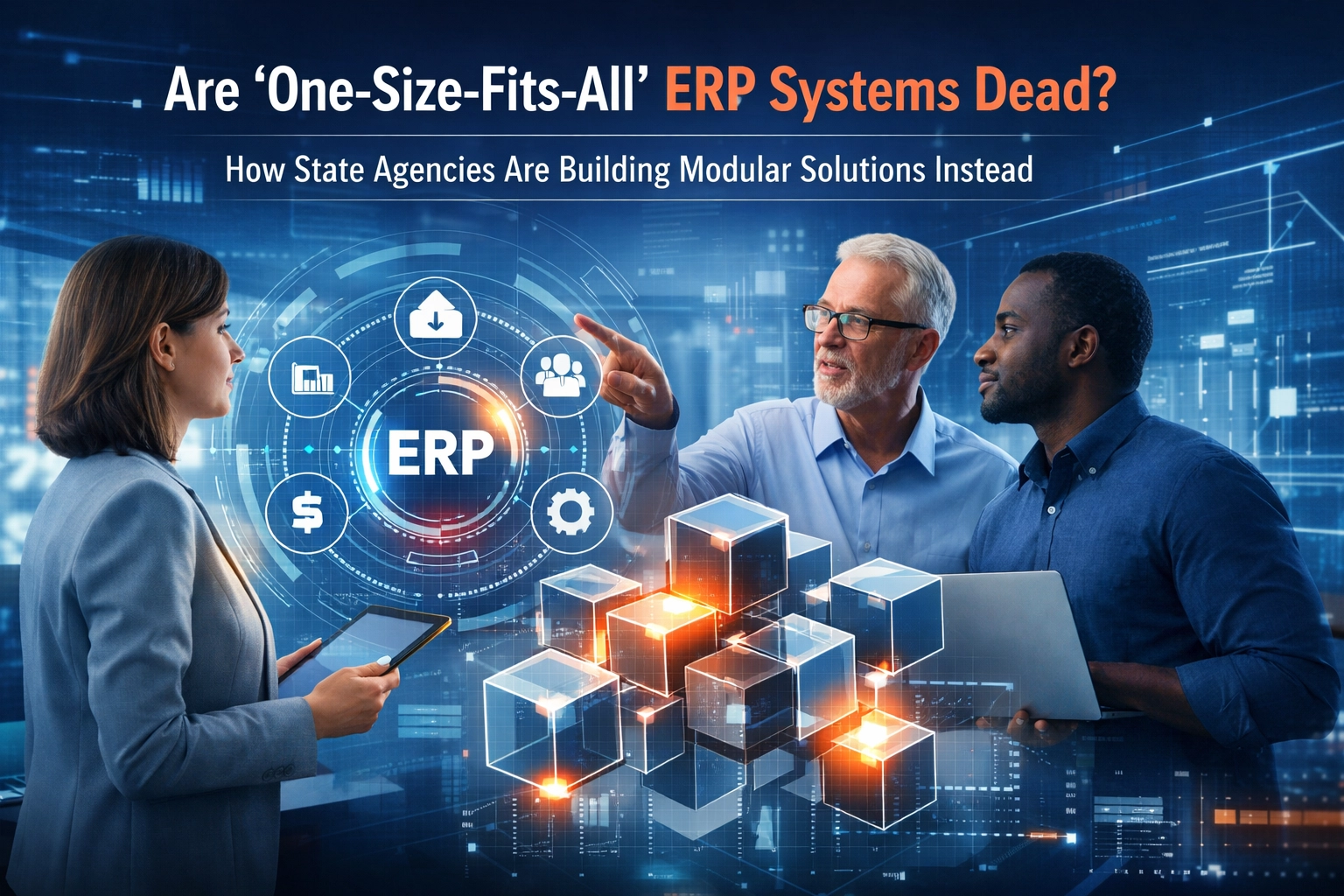
As digital transformation continues to reshape the public sector, state agencies are increasingly questioning whether traditional Enterprise Resource Planning (ERP) systems can keep up with their evolving needs. The answer emerging from government IT departments across the country is clear: monolithic, one-size-fits-all ERP systems are rapidly becoming relics of the past.
State and local government agencies are now building modular, composable ERP solutions that offer unprecedented flexibility and customization. This shift represents more than just a technology upgrade: it's a fundamental reimagining of how government organizations approach their core operational systems.
The Problem with Traditional ERP Systems
For decades, state agencies have struggled with standardized ERP systems that promised comprehensive functionality but delivered limited flexibility. These monolithic platforms typically came with basic features that barely scratched the surface of what modern government operations require.
The issues are well-documented: poor integration capabilities, outdated technology stacks, and rigid architectures that can't adapt to changing departmental needs. According to research from government technology analysts, agencies often find themselves piecing together multiple disconnected systems just to fill the gaps left by their primary ERP solution.
When your finance department needs one thing, your human resources team needs another, and your public works division requires something entirely different, a standardized system creates more problems than it solves. The result? Frustrated staff, inefficient workflows, and taxpayer dollars spent on workarounds rather than innovation.

Enter Modular ERP Architecture
The modular approach to ERP systems is transforming how state agencies think about their technology infrastructure. Instead of implementing a massive, comprehensive system all at once, organizations can now select and deploy specific modules that address their unique operational requirements.
Think of it like building with LEGO blocks rather than buying a pre-assembled model. Each agency can choose the pieces that fit their needs, snap them together in ways that make sense for their workflows, and add or remove components as requirements change.
This composable architecture represents a crucial shift in digital transformation strategy for government entities. Modern modular ERP platforms like Spectrum and Tyler ERP are leading this charge, allowing municipalities and state agencies to implement systems department by department rather than forcing full-scale rollouts that disrupt operations for months or even years.
How State Agencies Are Building Modular Solutions
The implementation strategies emerging from early adopters reveal several best practices for modular ERP deployment:
Department-by-Department Rollouts: Rather than attempting a big-bang implementation, agencies are starting with mission-critical departments. They might begin with core financial management, prove the concept, then gradually expand into utility billing, permitting, licensing, and other areas. This phased approach dramatically reduces disruption and improves adoption success rates among staff who might otherwise resist change.
Extensive Module Libraries: Some platforms are offering unprecedented flexibility through massive module libraries. Open-source solutions like Odoo provide more than 14,000 modules that government agencies can select and implement according to their specific needs. When requirements change: and they always do: agencies can add or modify functionality without overhauling the entire system.
Phased Customization Strategies: Smart agencies are identifying mission-critical features for quick rollout while planning for longer-term customization. This strategy deploys pre-configured modules that respect governmental workflows and compliance requirements, then allows for gradual refinement based on actual usage patterns and staff feedback.

The Role of Cloud Technology and Software Automation
Cloud-based ERP modules are proving essential for this modular revolution. Cloud infrastructure enables seamless integration between different modules and with other public sector systems: utilities, court systems, licensing databases, and more. This interconnectedness promotes data flow across government entities while supporting the remote work flexibility that has become increasingly important since 2020.
Software automation plays a crucial role in making modular systems work smoothly. Automated workflows connect different modules, ensuring that data flows correctly between finance, HR, operations, and public-facing services without manual intervention. This automation reduces errors, speeds up processes, and frees staff to focus on higher-value work rather than data entry and reconciliation.
For agencies working with managed IT services providers, the modular approach also simplifies support and maintenance. Instead of requiring expertise across an entire monolithic system, IT teams can develop deep knowledge in specific modules while relying on specialists for others.
Real Benefits State Agencies Are Experiencing
The shift to modular ERP systems is delivering tangible benefits for government organizations:
Reduced Implementation Risk: When you're only implementing one or two modules at a time, the potential for catastrophic failure drops significantly. If something goes wrong, it affects a limited scope rather than crippling your entire operation.
Cost-Effectiveness: Modular systems allow agencies to spread costs over time and invest only in the functionality they actually need. There's no pressure to pay for comprehensive features that might sit unused for years: or forever.
Faster Time-to-Value: Departments can start seeing benefits from new modules within weeks or months rather than waiting years for a complete system implementation. This quick feedback loop helps build organizational support for further modernization.
Improved Scalability: As agency needs grow or change, new modules can be added without replacing the entire system. This scalability is especially valuable for rapidly growing municipalities or agencies expanding their service offerings.

Enhanced Integration: Modern modular systems are built with integration in mind. APIs and standard connectors make it easier to link ERP modules with specialized government software, public-facing portals, and data analytics platforms.
Challenges to Navigate
While modular ERP systems offer significant advantages, agencies should be aware of potential challenges. Integration complexity can increase as you add more modules: each new component needs to communicate effectively with existing systems. This is where application development and integration expertise becomes valuable.
Data governance also requires careful attention. With information flowing between multiple modules and systems, agencies must establish clear policies about data ownership, access controls, and compliance requirements. However, these challenges are generally more manageable than the massive undertaking of implementing and maintaining a monolithic ERP system.
Vendor management may become more complex if different modules come from different providers, though many organizations find that working with a specialized managed technology solutions partner helps streamline this coordination.
Looking Ahead: The Future of Government ERP
The trend toward modular, composable ERP systems reflects a broader recognition that government agencies have diverse, evolving needs that no single standardized system can adequately address. As more state and local entities share their success stories with modular implementations, the one-size-fits-all approach looks increasingly outdated.
Emerging technologies like artificial intelligence and machine learning are being built into modern ERP modules, offering state agencies powerful capabilities for process automation, predictive analytics, and intelligent decision support. These advanced features are far easier to implement and customize within a modular architecture than trying to retrofit them into legacy monolithic systems.
For state agencies currently struggling with outdated ERP systems, the message is clear: you don't need to rip and replace everything at once. The modular approach offers a practical path forward: one that respects your budget constraints, minimizes disruption to ongoing operations, and delivers value incrementally.
The death of one-size-fits-all ERP systems isn't just about technology; it's about recognizing that effective government operations require flexible, adaptable tools that can evolve alongside the communities they serve. As more agencies embrace modular solutions, we're witnessing a transformation in how the public sector approaches digital transformation and managed IT services.
The question is no longer whether to move away from monolithic ERP systems, but how quickly your agency can begin building a more flexible, modular solution that truly serves your unique needs.

